
An Interview with Minoo Ghanbarzad, Exemplary Research Expert
The Vice-Presidency for Research and Technology News Desk of the University of Tehran:
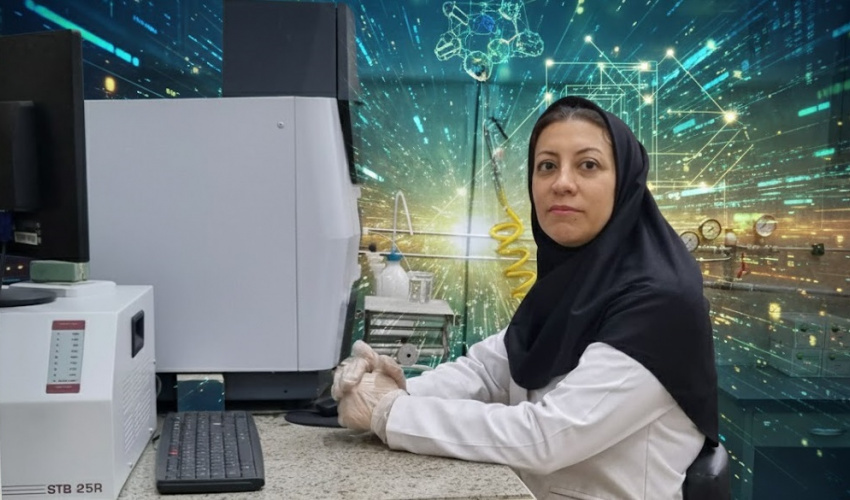
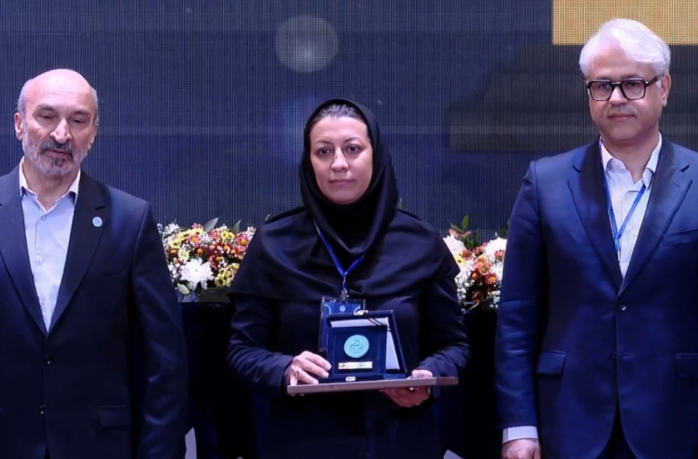
Ms. Minoo Ghanbarzad, the laboratory expert in charge of the Geochemistry Laboratory at the Faculty of Mining Engineering, was selected and honored as the "Exemplary Research Expert" at the 34th Research and Technology Festival of the University of Tehran, held on December 14, 2025 (23 Azar 1404), at the Allameh Amini Hall. On this occasion, we sat down for an interview with her to discuss her activities and perspectives in the field of research and laboratories. The full text of the interview is presented below.
Please introduce the laboratory where you work.
The Geochemistry Laboratory is responsible for the assaying of mineral materials related to student theses, as well as research and industrial projects, based on the laboratory's available facilities and capabilities. These assays are conducted using both instrumental and classical methods. The laboratory is equipped with two Atomic Absorption units and one Spectrophotometer. The head of the laboratory is Dr. Mohammad Noaparast, a Full Professor of Mining Engineering, specializing in Mineral Processing.
What is the difference between a routine experiment and one that leads to a significant research achievement?
In a routine experiment, data is only used to confirm or refute a hypothesis. However, in a significant experiment, the researcher is prepared to observe unexpected results and does not ignore them. Many great achievements have started from a result that was not initially intended to be important.
How do you evaluate the role of precision and equipment calibration in the international credibility of the university's research outputs?
These factors play a very effective and vital role in the credibility of research. In fact, equipment calibration is a direct investment in the scientific and research reputation of the university.
Has there been an instance where a technical suggestion or a change in the experimental protocol led to the success of a research project?
Yes, there have been cases where, by making small technical adjustments to the instruments and experimental methods, more accurate measurements were achieved. This action prevented the repetition of experiments and ultimately resulted in savings of both time and cost.
An Interview with Minoo Ghanbarzad, Exemplary Research Expert
The Vice-Presidency for Research and Technology News Desk of the University of Tehran:
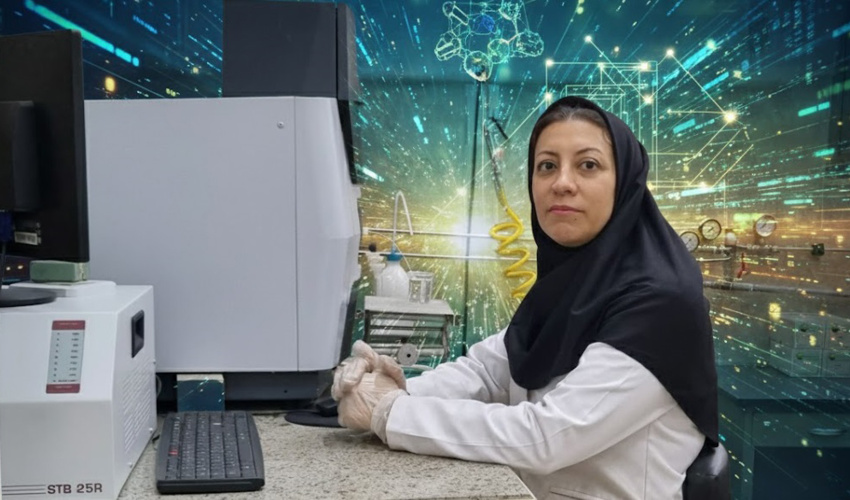
Ms. Minoo Ghanbarzad, the laboratory expert in charge of the Geochemistry Laboratory at the Faculty of Mining Engineering, was selected and honored as the "Exemplary Research Expert" at the 34th Research and Technology Festival of the University of Tehran, held on December 14, 2025 (23 Azar 1404), at the Allameh Amini Hall. On this occasion, we sat down for an interview with her to discuss her activities and perspectives in the field of research and laboratories. The full text of the interview is presented below.
Please introduce the laboratory where you work.
The Geochemistry Laboratory is responsible for the assaying of mineral materials related to student theses, as well as research and industrial projects, based on the laboratory's available facilities and capabilities. These assays are conducted using both instrumental and classical methods. The laboratory is equipped with two Atomic Absorption units and one Spectrophotometer. The head of the laboratory is Dr. Mohammad Noaparast, a Full Professor of Mining Engineering, specializing in Mineral Processing.
What is the difference between a routine experiment and one that leads to a significant research achievement?
In a routine experiment, data is only used to confirm or refute a hypothesis. However, in a significant experiment, the researcher is prepared to observe unexpected results and does not ignore them. Many great achievements have started from a result that was not initially intended to be important.
How do you evaluate the role of precision and equipment calibration in the international credibility of the university's research outputs?
These factors play a very effective and vital role in the credibility of research. In fact, equipment calibration is a direct investment in the scientific and research reputation of the university.
Has there been an instance where a technical suggestion or a change in the experimental protocol led to the success of a research project?
Yes, there have been cases where, by making small technical adjustments to the instruments and experimental methods, more accurate measurements were achieved. This action prevented the repetition of experiments and ultimately resulted in savings of both time and cost.
Your Comment :