
Narrative: college of Engineering on the path of transformation
college of engineering on the path to financial transparency, educational transformation, and solving the country's major issues / Formation of an "Education Transformation" committee in technical colleges; serious review of engineering
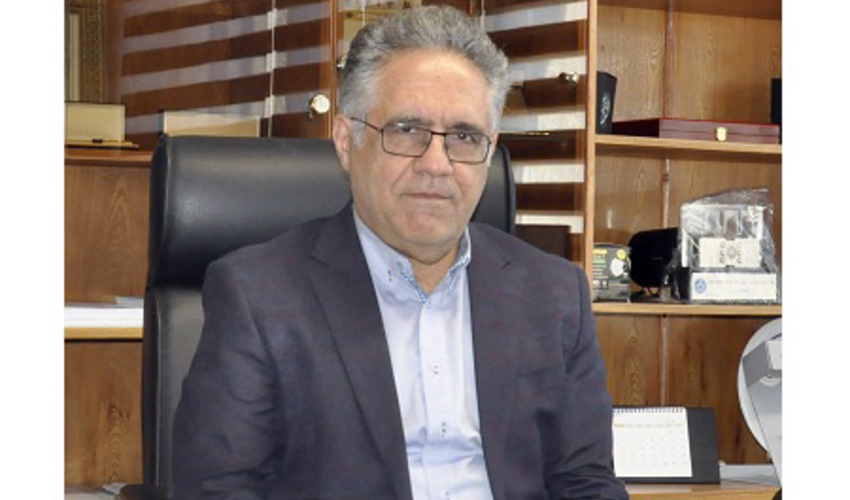
According to the Public Relations Department of the College of Engineering, Dr. Mehdi Ghasemieh, Dean of the College of Engineering, referring to the country's economic conditions and financial pressures in recent years, added: "In the past, due to the relative abundance of resources, precise budget separation did not seem necessary, but today, transparency of income and expenditure is a management requirement."
Budget separation: a fateful decision for College of Engineering
Stating that the budget of the faculties affiliated with the College of Engineering has been defined independently in the new period, he clarified: "Each faculty receives a certain share of resources based on its performance, and the responsibility for managing costs lies with them. Of course, central supervision still exists, but this relative independence has enabled more precise planning and optimal use of resources."
Strengthening skills training by purposefully guiding open training
Referring to the activities of the Open Technical Education Center, the dean of the College of Engineering, said: "This center is one of the oldest and most active open education centers of the University of Tehran, and in recent times, efforts have been made to direct its activities in a targeted manner and in accordance with the needs of the country, both in the fields of engineering and management. Although we are still far from the desired point, the path forward has been determined and skills training is gradually being strengthened."
Connection with industry: an inevitable necessity for engineering disciplines
Emphasizing the applied nature of engineering disciplines, Dr. Qasemieh said: "Connecting with industry is not an option for College of Engineering, but a necessity. In addition to teaching and research, professors must be involved in industrial projects so that both knowledge is updated and real industry issues are transferred to the university." He announced the development of cooperation with various industries, especially in the steel chain, and added: "From mines to steelmaking industries and executive applications, extensive connections have been established with large and medium-sized companies, which has led to the definition of research projects, holding conferences, and creating practical opportunities for students. One of the important achievements of this interaction is the entry of students into industrial projects during their studies or after graduation; an experience that plays an important role in their skill training and employability."
Formation of an "Education Transformation" committee in College of Engineering; serious review of engineering disciplines
Dr. Ghasemieh announced the formation of the “Education Transformation” Committee in the College of Engineering and said: “The classical structure of engineering disciplines no longer meets the needs of today’s society and the world. Moving towards interdisciplinary disciplines and a serious revision of curricula are among the main axes of this transformation. This process requires time, careful consideration, and expert consensus, and has not yet reached a final result, but it is seriously on the agenda.”
The dean of the College of Engineering of the University of Tehran considered reforming and strengthening the infrastructure for international introduction as the first step on the path to internationalization and said: “The website of the technical schools, as a reference, must be able to attract foreign audiences."Producing international multimedia content, connecting with foreign universities, and focusing on effective indicators in global rankings are among the measures being pursued to improve the international standing of technical colleges."
The role of the professor in skill avoidance and academic orientation
In response to a question about skill deregulation in higher education, Dr. Ghasemieh said, “A significant part of this issue comes down to the role of the professor. The way of teaching, the level of student engagement, and the linking of theoretical topics with practical issues determine the level of skill acquisition. Faculties make policies, but the actual implementation of skill education takes place in the classroom and by the professor.” Referring to the high capacity of the country’s major universities to respond to the technological needs of the industry, he said, “The University of Tehran has this ability, but the main condition is the trust of the industry in the university. In some areas, this trust has been formed, but in traditional industries there is still a gap.”The dean of the Faculty of Engineering at the University of Tehran identified basic sciences as one of the neglected areas, saying: "Mathematics and physics are the backbone of engineering disciplines, but they must be taught with attractive methods, modern tools, and interactive training so that students can establish a deeper connection with these subjects. Universities are a combination of problem solving and science production, and technical faculties are forced to both respond to the country's real problems and move within the boundaries of knowledge."
Organizing development plans and optimizing spaces
The Dean of Faculty of Engineering, pointing out that over the past two decades, many development plans have been defined at the university, some of which were not really necessary, criticized the category of higher education needs from a purely quantitative and development perspective and said: "Unfortunately, we see all development in the construction of new buildings, while this is part of the needs and software and hardware development is perhaps a more urgent need. This is why many projects are activated in the country and spend large amounts of budgets, while this need can be met in another way by optimally using existing spaces and organizing them."The professor of the Civil Engineering Department of the Faculty of Engineering continued: "I do not deny the development and need for buildings, but if a building is to be built, it must be truly designed for the needs and other spaces must be managed; something we did for a period in the Faculty of Engineering and it was a very successful experience, in a way that perhaps saved us from having to build an additional building with a budget of several hundred billion Tomans. We hope that this experience will also be taken into consideration at the university."
The capacity of the University of Tehran to be free from government funding
In conclusion, he emphasized the capacities of the University of Tehran and stated: "The University of Tehran has the ability to minimize its dependence on government funding by using its assets, human capacities, and connections with industry; provided that decision-making structures are designed to be more flexible and appropriate to the nature of the faculties."
Your Comment :