
The result of the research of researchers from the College of engineering at the University of Tehran:
Increasing the accuracy of partial discharge location in power plant generators using artificial intelligence
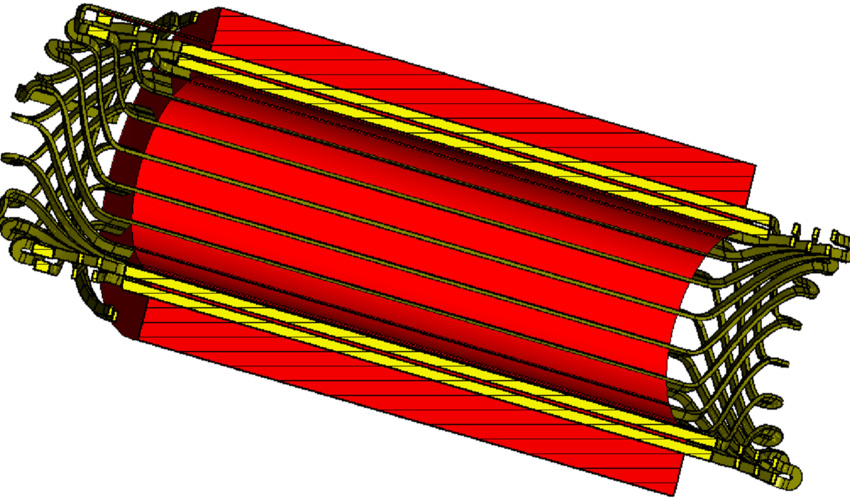
According to the Public Relations Office of the College of engineering, an article titled "Deep Learning Approaches for Partial Discharge Localization and Apparent Charge Prediction in Generator Stator Windings" is the result of joint research by Mehdi Noorollahi, Dr. Mohammad Hamed Samimi, a faculty member of the School of Electrical and Computer Engineering at the University of Tehran, and Dr. Arash Abyaz, a graduate of the University of Tehran, has been published in the prestigious IEEE Transactions on Dielectrics and Electrical Insulation journal.
Partial discharges are one of the most important signs of insulation degradation in electric generators, and their timely detection plays an important role in preventing extensive damage and costly repairs to power plant equipment. However, due to the structural characteristics of stator windings, signals from partial discharges are attenuated during propagation, and accurate detection of their location and determination of the amount of electrical charge of the discharge are associated with numerous challenges.
In this study, researchers at the University of Tehran used a 3D finite element method (FEM)-based simulation model to simulate the behavior of partial discharge pulses in generator stator windings and generated a comprehensive set of data related to this phenomenon. The output signals were then used as input data for deep learning models after passing through various frequency filters.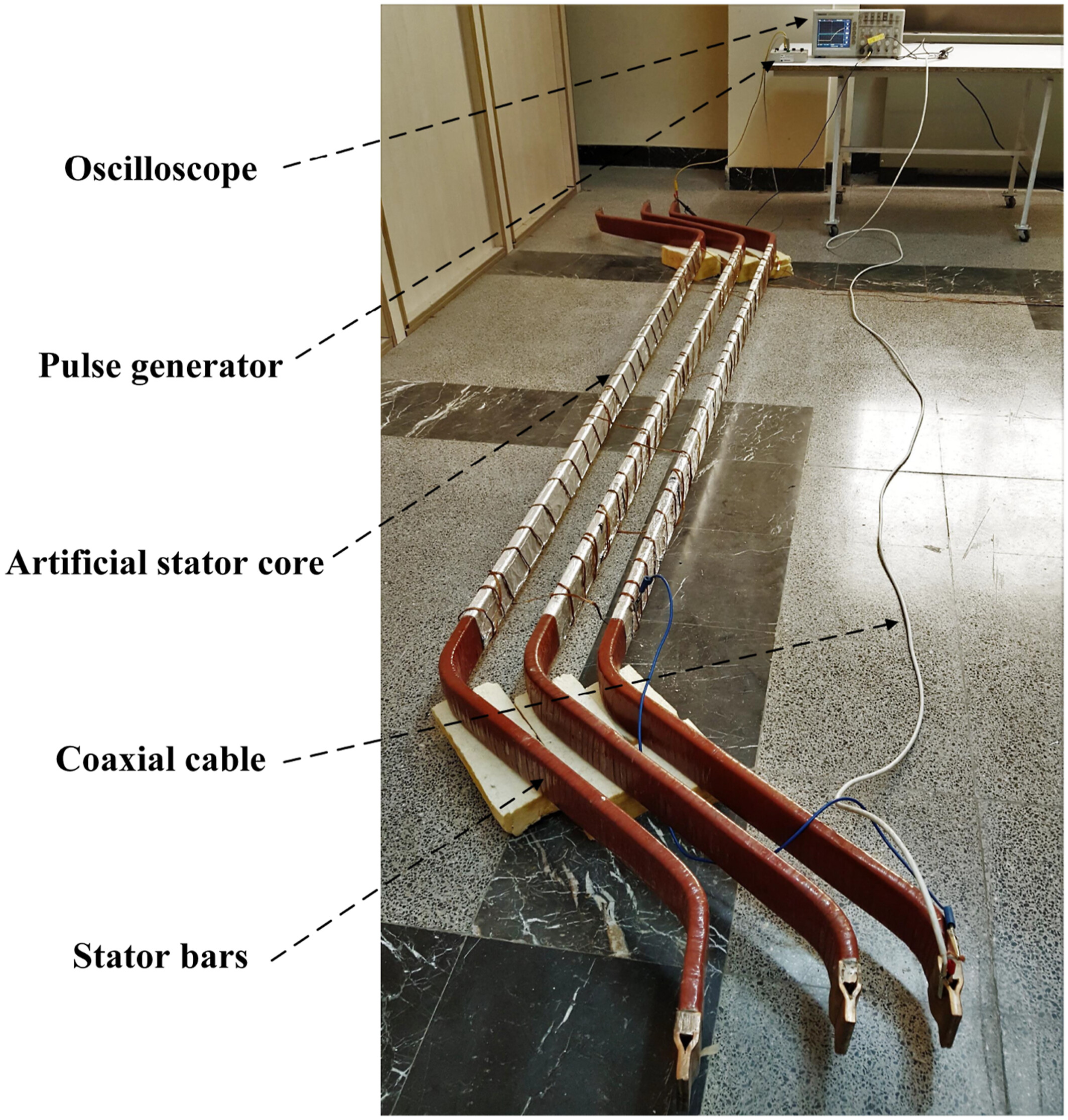
In this study, the performance of five different neural network architectures, including Multilayer Perceptron Network (MLP), Convolutional Neural Network (CNN), Temporal Convolutional Network (TCN), CNN LSTM hybrid model, and Transformer model, was evaluated in two main tasks, namely locating partial discharges and predicting their apparent charge value.
The results of this study showed that the Transformer model has shown the best performance in locating the location of partial discharges in the stator windings. The self-attention mechanism used in this model has enabled the detection of complex dependencies and accurate separation of locations close to each other, and has significantly reduced the classification error rate.
Also, in the section of predicting the apparent charge value of discharges, the CNN model has performed better than other models and has recorded the lowest error and deviation in predicting the electric charge values. These results indicate that the selection of the appropriate architecture of neural networks should be done according to the type of problem and the characteristics of the data being analyzed.
Another innovation of this research is the simultaneous use of multiple frequency filters with different bandwidths, which allows for the extraction of complementary features from partial discharge signals. This approach, while adapting to the real conditions of industrial measurements, significantly increases the accuracy of intelligent fault diagnosis systems.
According to the researchers, the results of this study show that deep learning models can be a good complement to traditional partial discharge analysis methods and reduce the challenges of traditional partial discharge analysis in generators by automatically extracting important signal features. These models can also be used in predictive maintenance and repair systems for power plant generators and can prevent widespread failures and unwanted shutdowns in power generation networks by providing accurate information about the location and severity of partial discharges.
This research has paved a new path for the development of intelligent partial discharge monitoring systems for generators using deep learning hybrid models.
This article can be viewed at the following link:
https://doi.org/10.1049/hve2.70118Digital Object Identifier (DOI)
Your Comment :