
On the Path to Connecting Industrial Engineering with Real-World Industrial Problem Solving
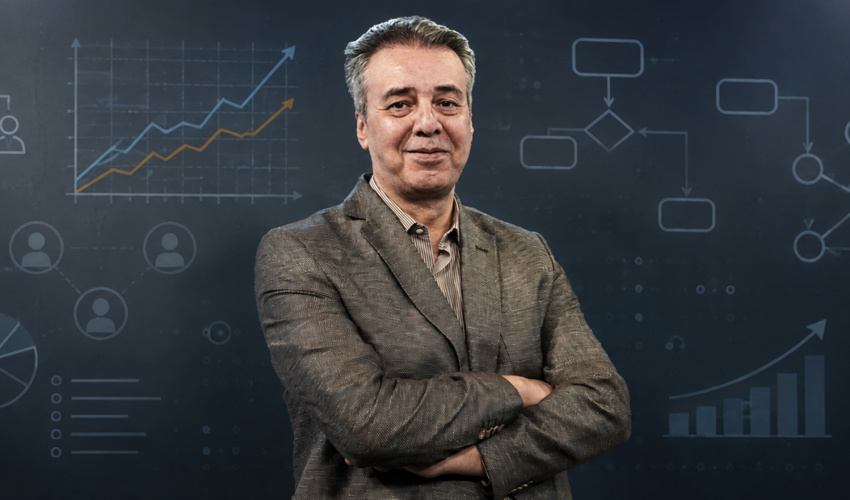
Dr. Seyed Ali Torabi, a professor at the School of Industrial Engineering at the University of Tehran and a distinguished researcher, emphasized that industrial engineering is an interdisciplinary field that integrates engineering, management, operations research, and data science. He explained that its primary objective is to design, redesign, and improve industrial and service systems with the aim of increasing productivity, reducing costs, improving quality, and enhancing customer satisfaction.
He noted the broad range of applications of industrial engineering, explaining that the field is not limited to manufacturing and industrial organizations and can also play an effective role in analyzing and optimizing processes in service, banking, governmental, and infrastructure organizations. According to Dr. Torabi, organizations such as banks also have a wide range of procurement, supply, maintenance, distribution, and support processes that can be modeled, evaluated, and improved using industrial engineering tools.
In this context, Dr. Torabi referred to his experience collaborating with Tejarat Bank and Mellat Bank on projects related to the improvement of logistics systems and processes. These projects were undertaken with the aim of redesigning and optimizing logistics processes, reducing resource waste, and increasing the efficiency of organizational operations. They demonstrate that industrial engineering approaches can be applied beyond the factory environment, including in complex service organizations.
He also referred to a Supplier Relationship Management project at Mobile Telecommunications Company of Iran (MCI). Given the scale and diversity of the company's supplier base, the project focused on improving supplier management processes and applying optimization and systems modeling methods. From an industrial engineering perspective, managing such a network requires a thorough understanding of supply flows, evaluation of supplier performance, and the design of mechanisms to enhance coordination, reduce costs, and improve service quality.
In another part of the discussion, Dr. Torabi spoke about his experience working with the Ministry of Energy and in the field of performance management. He explained that performance and productivity measurement can help organizations identify their weaknesses and define improvement projects to address them. In this approach, key performance indicators (KPIs) and management monitoring tools play an important role in establishing a link between an organization's strategic objectives and its actual performance.
Dr. Torabi also discussed his experience in the mining sector and projects associated with IMIDRO (Iranian Mines and Mining Industries Development and Renovation Organization). In these projects, which focused on industries related to steel, copper, aluminum, lead, zinc, and gold, productivity improvement projects were identified and developed across different stages of the mining value chain. Areas of focus included improving performance in exploration, extraction, processing, and the utilization of equipment and resources—areas that can have a direct impact on reducing costs and increasing productivity in these industries.
Dr. Torabi then addressed risk management, resilience, and business continuity, identifying his collaboration with the Tehran Disaster Management and Prevention Organization as one of his experiences in this field. The project focused on designing and implementing a business continuity management system to enhance an organization's ability to continue operating under crisis conditions. This approach is particularly important when dealing with hazards such as natural disasters, pandemics, war, sanctions, and cyberattacks.
He emphasized that risk management is not merely limited to responding after a crisis occurs. Rather, organizations should identify and classify critical risks before disruptions take place and develop appropriate scenarios and strategies to ensure continuity of operations under different conditions. From this perspective, organizational resilience is a key element in the design and management of complex systems.
Dr. Torabi also highlighted the concept of continuous improvement, describing it as one of the fundamental principles of industrial engineering. He explained that no system can be considered completely optimized and permanently free from the need for modification. Accordingly, organizations should continuously evaluate their performance, identify weaknesses, and use data, modeling, and scientific methods to develop and implement corrective and improvement projects.
He further referred to one of his research areas of interest, namely sustainable development and the circular economy. Within this framework, reducing resource consumption, managing waste, recycling, and returning reusable materials and components to the production cycle are among the areas in which industrial engineering can play an effective role through the design and management of circular supply chains.
As an example, Dr. Torabi pointed to the rapid growth of electronic waste (e-waste) worldwide and emphasized the importance of designing reverse logistics systems across different industries. Many used electronic devices contain valuable materials and components that, if an appropriate chain for collection, sorting, repair, reuse, and recycling is established, can be returned to the economic cycle. This approach is part of the circular economy concept, which seeks to extend the useful life of products and resources while reducing material waste and environmental damage.
Overall, Dr. Torabi described industrial engineering as a discipline concerned with the design and improvement of complex production and service systems. By drawing on operations research, mathematical modeling, simulation, data science, artificial intelligence, and management theories, the field can be applied to solving real-world problems faced by organizations and industries. In his view, the greatest impact of industrial engineering can be achieved when specialized knowledge is combined with a problem-oriented approach, data, modeling, and practical experience, enabling universities to directly channel part of their scientific capacity toward solving the real-world challenges facing the country.
Your Comment :