
New Solution by Electrical and Computer Engineering Researchers Enhances AI Security in Brain MRI Analysis
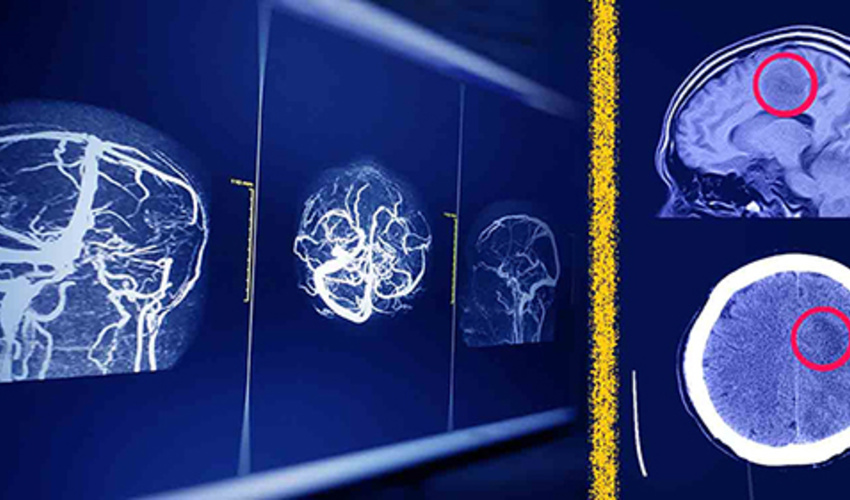
According to the Public Relations Office of the College of Engineering, the researchers from the School of Electrical and Computer Engineering have developed a framework called OptiGradTrust, presented in a study published in Scientific Reports. The framework is designed to enhance the robustness and trustworthiness of AI systems for brain MRI analysis.
Federated learning is an emerging approach in artificial intelligence that enables multiple institutions, including healthcare and research centers, to collaboratively train a shared AI model without transferring raw patient data. In this approach, the original data remain at their respective locations, while only information derived from model training and updates is exchanged between participating institutions and the central server. This feature can help protect patient privacy.
However, federated learning presents several challenges. Differences in imaging devices, acquisition protocols, patient characteristics, and the quantity and quality of available data can lead to substantial heterogeneity across participating institutions. Furthermore, a participating institution may introduce unreliable information into the training process due to technical errors, poor data quality, or even intentional malicious behavior. Such contributions can degrade the performance of the resulting model, a particularly critical concern in sensitive medical applications.
To address these challenges, the researchers introduced the OptiGradTrust framework. Rather than assigning equal trust to all information submitted by participating institutions, the framework evaluates their contributions from six complementary perspectives. These include the similarity of training information to expected patterns, its consistency with contributions from other institutions, the magnitude of changes introduced into the model, the consistency of the submitted information, and each institution's contribution to improving overall model performance.
The framework subsequently employs a mechanism combining reinforcement learning and attention networks to integrate the evaluation results and determine the trustworthiness of each institution's contribution. Consequently, contributions from institutions exhibiting abnormal or suspicious behavior receive less influence on the final model. The framework also incorporates an optimization method designed to address heterogeneous data distributions and malicious contributions, with the aim of maintaining the stability of the training process.
To evaluate the proposed framework, the researchers conducted experiments on several datasets, including MNIST, CIFAR-10, an Alzheimer's disease-related brain MRI dataset, and the clinical OASIS dataset.
The results demonstrated that the proposed method maintained promising performance even when data distributions differed substantially across participating institutions. On the Alzheimer's disease-related MRI dataset, the framework achieved 95% accuracy under heterogeneous data conditions, outperforming the comparison methods, including FLGuard, FLTrust, and FLAME, which reported lower accuracy levels.
A key contribution of this research is its integration of two important objectives in medical artificial intelligence: preserving patient privacy and strengthening model security. Under the proposed framework, patients' raw MRI data are not shared with other institutions, allowing them to participate in collaborative model training while retaining their original data locally. At the same time, the system seeks to identify abnormal or malicious contributions before they can substantially compromise the model and reduce their influence on the training process.
Despite these encouraging findings, the authors emphasize that the proposed method should not yet be considered ready for clinical deployment. In particular, the number of samples used in the clinical evaluation involving the OASIS dataset was limited, and the findings from this stage should be interpreted as a proof of concept. Further validation using larger, multicenter datasets, such as ADNI and UK Biobank, as well as investigations involving more sophisticated attack scenarios, will be necessary to establish the framework's performance and reliability more conclusively.
The article, entitled “Byzantine Robust Federated Learning for Heterogeneous Brain MRI Using Multisignal Gradient Fingerprinting and Adaptive Trust Aggregation,” was co-authored by Mohammad Karami, an M.Sc. student at the School of Electrical and Computer Engineering; Dr. Fatemeh Ghassemi; and Dr. Hamed Kebriaei, faculty members of the School of Electrical and Computer Engineering, University of Tehran. The study was published in Scientific Reports.
Read the full article:
Your Comment :