
University of Tehran Professor Awarded U.S. Patent for Electroporation of Surgically Sensitive Regions
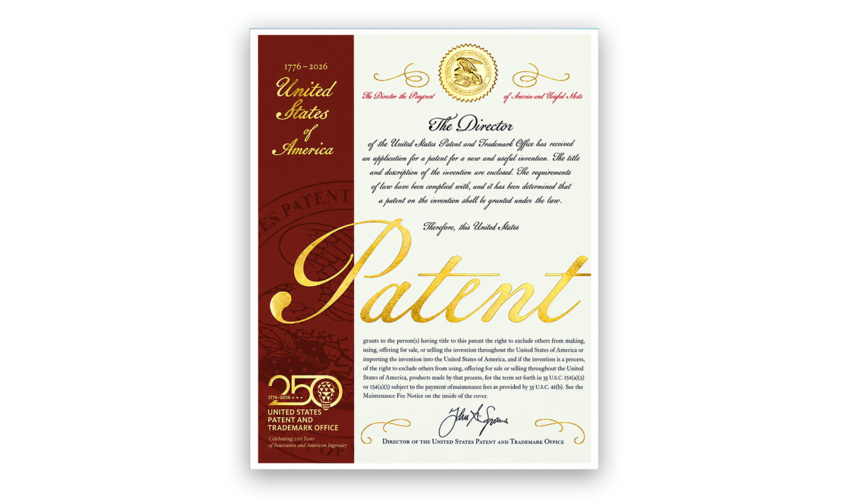
According to the Public Relations Office of the College of Engineering, the invention, entitled “Electroporation/Electrochemotherapy of Surgically Sensitive Regions,” was granted U.S. Patent No. US 12,746,388 B2 by the United States Patent and Trademark Office (USPTO) on September 29, 2026.
The patent derives from international patent application PCT/IB2023/058455, published as WO2025/046258 on March 6, 2025. The U.S. patent lists 12 inventors, including Dr. Mohammad Abdolahad, Dr. Seyed Rouhollah Miri, and Dr. Habibollah Mahmoodzadeh, alongside other researchers. Dr. Abdolahad is identified as the lead researcher in the university's announcement.
Technological Innovation
The patented technology addresses challenges associated with applying electroporation in sensitive anatomical regions and areas that are difficult to access surgically. It describes electrode designs intended to improve contact with target tissues, facilitate the delivery of pulsed electric fields, and reduce the need for conventional needle-based electrode insertion in selected applications.
According to the patent specification, the technology comprises two principal systems:
1. Vacuum-Assisted Superficial Electroporation Probe
The first system is a superficial electroporation probe incorporating at least two U-shaped wire-blade electrodes mounted on a supporting structure. The electrodes are designed to make contact with the target tissue without necessarily penetrating it. A vacuum-pressure generator draws the tissue toward the electrodes, helping establish firm and consistent contact.
The patent describes vacuum pressures ranging from −0.5 to −0.7 bar and an exemplary electrical stimulation protocol consisting of eight square-wave pulses, with a specified electric-field strength of 500–1,500 V/cm and a pulse duration of 100 microseconds.
This configuration is intended for applications involving superficial tissues, tissue margins, and regions in which needle insertion may be undesirable or potentially harmful. The design aims to facilitate the application of a pulsed electric field while minimizing mechanical trauma to the target tissue.
2. In Vivo Electroporation System with a Flexible Magnetic Electrode
The second system is designed for in vivo electroporation in internal anatomical regions. It incorporates a flexible electrode formed by a series of spherical magnets connected in sequence. The electrode can be introduced into a target region, while an external plate electrode—comprising a plate magnet or ferromagnetic steel plate—provides magnetic guidance for positioning and movement.
A camera may be attached to the first spherical magnet to capture images or video of the target region. The resulting information can be used to track the electrode's location and guide its positioning.
The patent describes potential applications in hollow organs and anatomical passages, including the intestine, esophagus, vagina, stomach, duodenum, colon, cervix, and uterus. By combining a flexible internal electrode with external magnetic guidance, the system is intended to facilitate electroporation in regions that may be difficult to reach using conventional electrode configurations.
Addressing Limitations of Conventional Electroporation
Conventional electroporation techniques often employ needle electrodes to deliver electric fields to target tissues. Although effective in appropriate settings, needle insertion may present challenges in delicate anatomical regions, particularly near blood vessels, nerves, and hollow organs, where tissue injury or perforation is a concern.
Flat electrodes, meanwhile, may not always provide sufficiently close or uniform contact with irregular tissue surfaces. The patented systems address these challenges through two complementary approaches: vacuum-assisted tissue positioning for superficial applications and magnetic guidance of a flexible electrode for selected internal applications.
The proposed configurations are intended to improve electrode positioning and electric-field delivery while reducing mechanical trauma. However, the extent to which these advantages translate into improved safety or therapeutic outcomes requires further experimental and clinical evaluation.
Preclinical Evaluation
The patent describes illustrative experiments involving a mouse model of breast cancer and an animal model for assessing electroporation in the large intestine.
In the mouse experiment, ultrasound images were obtained from tumors in control and treated animals at baseline and on days 4 and 7. Tumor dimensions were documented at these time points to illustrate changes following treatment. These observations provide preliminary experimental information; the patent's illustrative data should not, by themselves, be interpreted as establishing statistically significant therapeutic efficacy.
In a separate experiment, a flexible electrode consisting of spherical magnets was introduced through the rectum of a rabbit and advanced to the rectosigmoid region. An external plate magnet was positioned over the animal's abdomen to guide the internal electrode. Electroporation stimulation was then applied at an electric-field strength of 1,000 V/cm, and the flexible electrode was moved along the large intestine.
Computed tomography (CT) imaging performed 12 days after stimulation showed no observable damage attributable to electrode introduction or electroporation in the rectal and rectosigmoid regions, as reported in the patent. This finding provides preliminary evidence concerning tissue tolerance under the conditions of that particular experiment, but it does not establish safety across other settings or in human patients.
Interdisciplinary Collaboration
The invention reflects collaboration across biomedical engineering, cancer bioelectronics, and surgical oncology. Among the researchers and clinicians identified in the patent and the university's announcement are Dr. Mohammad Abdolahad, Professor at the College of Engineering, University of Tehran, and recipient of the 2019 Mustafa Prize; Dr. Seyed Rouhollah Miri, Associate Professor of Surgical Oncology and Head of the Cancer Institute; and Dr. Habibollah Mahmoodzadeh, Professor of Surgical Oncology at the Cancer Institute.
The involvement of researchers from complementary disciplines highlights the importance of integrating engineering-based device development with clinical expertise when designing technologies for anatomically challenging treatment settings.
Potential Implications and Future Directions
The patented technology represents a potential contribution to the development of electroporation-based approaches for localized cancer treatment and other applications involving the delivery of electric fields to sensitive tissues. Its principal innovation lies in the design of electrode systems intended to improve access to target regions and facilitate electrical stimulation while limiting mechanical disruption of surrounding structures.
Further research will be necessary to establish the reproducibility of the reported findings, characterize the safety and performance of the devices across relevant anatomical settings, and determine their suitability for specific therapeutic applications. In particular, clinical studies will be required before conclusions can be drawn about their safety and efficacy in human patients.
The patent therefore marks an important milestone in the development and intellectual-property protection of this technology, while its ultimate clinical significance will depend on the results of subsequent preclinical and clinical investigations.
Your Comment :